
Three Questions to Youssef Nabil
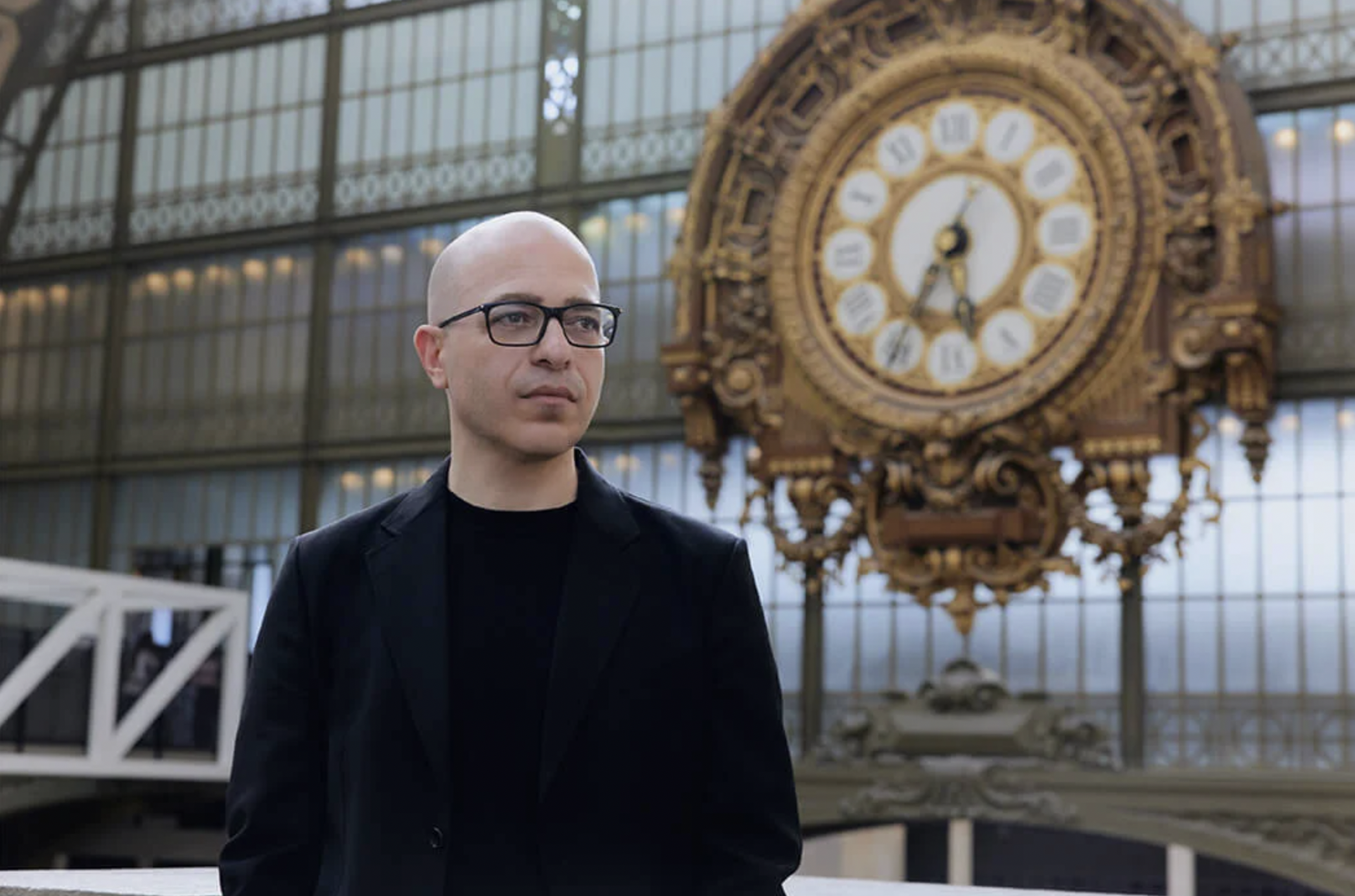
Youssef Nabil devant l’horloge du musée d’Orsay. Photo by Alex Kostromin
Born in 1972, Franco-Egyptian photographer and videographer, Youssef Nabil, draws inspiration from the concept of memory and the cinematic universe he grew up admiring in his native country, Egypt. Nabil began his career at the age of 20 by staging tableaux in which his subjects acted out melodramas recalling film stills from the golden age of Egyptian cinema. His works’ ethereal aesthetics take from the hand coloring photography technique of the technicolor films. By hand-painting each of his black and white photographs, he makes variations out of editions, each a unique version of his labor. His photographs provide an escape from reality, funneled through his cinematographic sensibility. They are marked by a sense of calm, safety and pleasure, flirting with notions of exoticism and eroticism. The images seamlessly defies the confines of genres, melding together to create a dreamlike sensual mise en scène.
The exhibition Youssef Nabil. To Dream Again, currently on display at the Musée d’Orsay until September 13th, 2026, marks a full-circle moment for the artist, who first visited the Musée d’Orsay at the age of 20.
An Interview with Youssef Nabil
Q:What does the Musée d’Orsay represent for you?
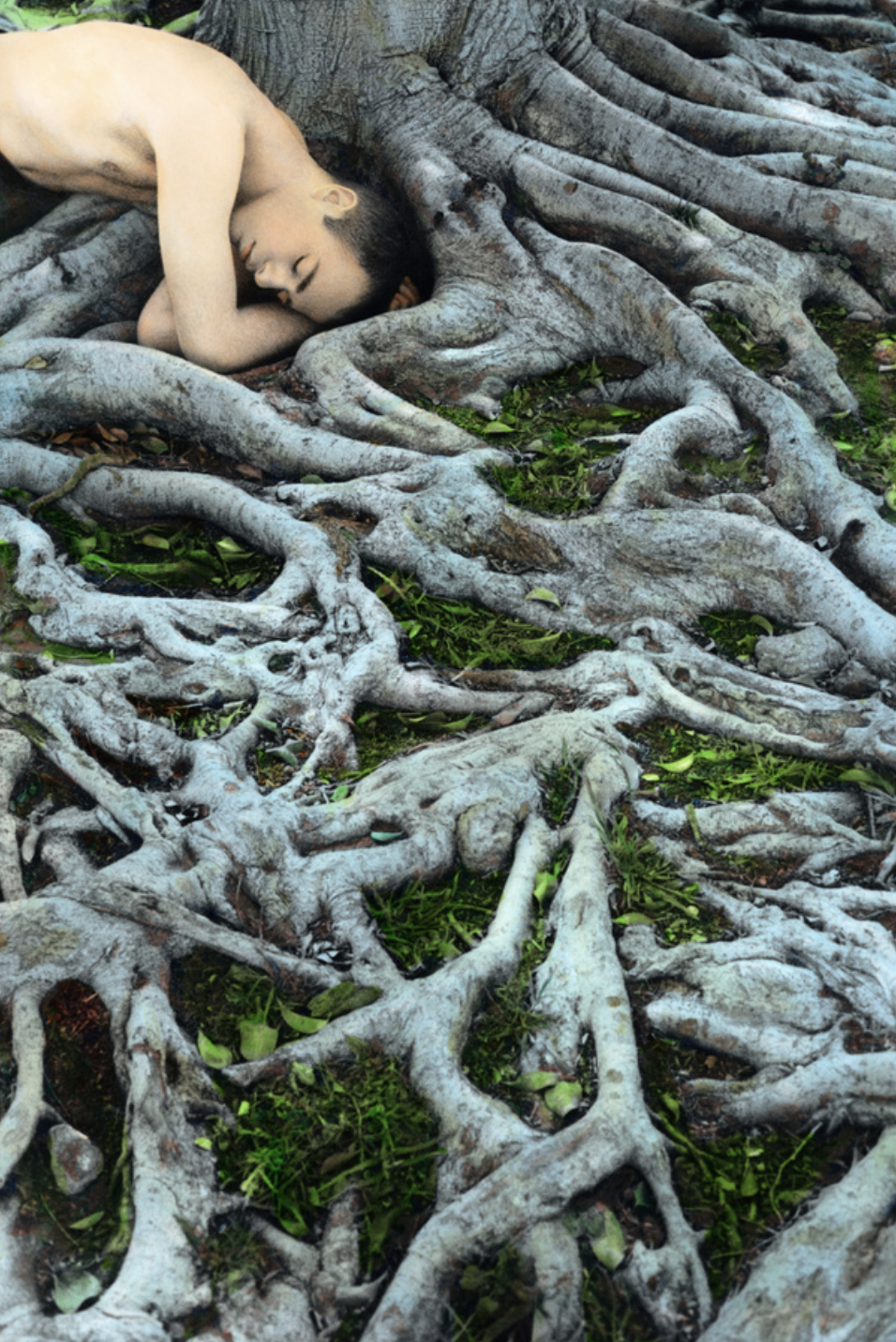
Youssef Nabil, ‘Self-portrait with Roots, Los Angeles’, 2008, © Youssef Nabil Courtesy Youssef Nabil
A: It was the first museum I visited when I first came to Paris in 1992, a decisive year in my career. I was 19 and had, until then, never left Egypt. During this visit, I was marked by the Symbolist painters, like Odilon Redon and was profoundly touched by The Dream (1883), a painting imbued by Pierre Puvis de Chavannes’ poetry. At the dawn of my artistic journey, I saw myself in this young man who in his sleep sees three nymphs, allegories for Glory, Wealth, and Love. In 2021, with The Dream, Self-Portrait, I revisited this work by inserting my portrait in the tableau photographed using a transparency effect. With this exhibition at the Musée d’Orsay, reality meets the dream, as if the circle was complete.
Q:As a Franco-Egyptian, how do you perceive the orientalist works in the museum’s collections?
A: If the artists from this movement, like Jean Lecomte du Noüy or Alexandre Cabanel, placed a Western perspective on a culture that did not belong to them, I recognize in their works an Orient that they documented beautifully, maybe dreamed I recognize in their paintings a beautifully documented Orient, maybe fantasized, but which exists for me. I love their odalisques, which bear witness to a free sensuality. It can also be found in the Technicolor cinema of Egypt's golden age, which permeated my childhood, through this figure of the belly dancer. I myself staged it in the video I Saved My Belly Dancer, with Salma Hayek, which is on view in this exhibition.
Q: Speaking of, how does orientalism influence your work?
A:It is omnipresent. The Room, my last video, which I am presenting for the first time at the Musée d'Orsay, is a metaphor for our time on Earth. I dream as the artist Marina Abramović, a kind of angel, visits me and transports me soon to a different world, evoking a porous border between life and death. Returning to Orsay, is therefore for me a conversation with the orientalists, to question the methods of representing the Orient, but also with the symbolist painters, to contrast my story to their works.